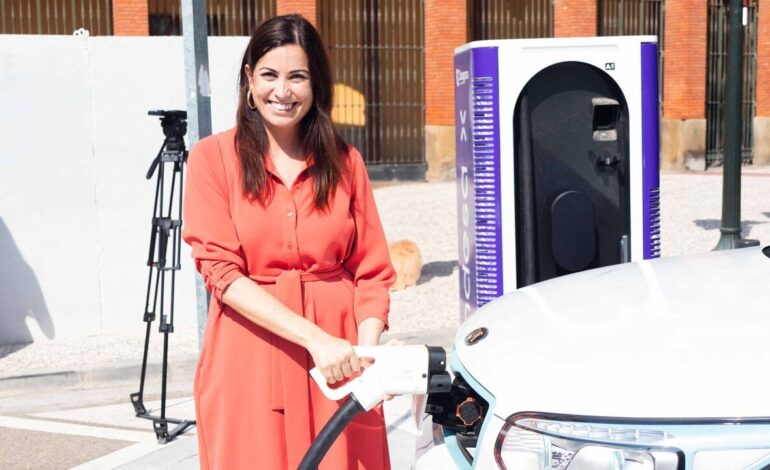

The 149 recharge points for electric vehicles than the Zaragoza City Council It has installed in 37 locations they have already avoided the emission of 668.2 metric tons of CO₂ to the atmosphere. This infrastructure, managed by Endesa X Way and Zunder companies, has supplied a total of 747,963 kWh of 100% renewable energy since its implementation. This amount of energy is equivalent to almost five million kilometers traveled by electric cars in urban conditions.
According to the report prepared by the Consistory Mobility Service, that reduction of emissions would be equivalent to the annual CO₂ absorption capacity of about 20,248 mature trees. This reinforces the positive environmental impact of the electric recharge system in a city that bets on sustainability and decarbonization of urban transport.
The Minister of Environment and Mobility, Tatiana Gaudes, stressed this Thursday that “we are collecting the fruits of a pioneer idea that the mayor launched Natalia Chueca“, and stressed that Saragossa It has one of the most advanced municipal recharge services of Spain. “We are facilitating a real change in urban mobility, not only for residents, but also for those who visit us,” he added.
The calculation of environmental benefits of the report also includes a fossil fuel estimate not consumed. Specifically, more than 249,000 liters of diesel have been avoided that would have been necessary to travel the same 4.98 million kilometers in diesel vehicles. In addition, since it is certified renewable electricity, the carbon footprint of the recharge system is void.
With this initiative, Zaragoza consolidates its position as a national reference in the electrification of urban transport. The expansion of the recharge points network is aligned with the municipal strategy to boost clean and accessible mobility, in which the use of the electric car is integrated with other sustainable options such as the tram, ecological buses and the public bicycle system.