
Touring Aragon is entering a land that combines snow -covered mountain landscapes with fertile and green valleys, a natural diversity that surprises in every corner. In the small villages of the Pyrenees, of the Pre -Pyrenees or the Iberian system, the traveler finds medieval strengths, Romanesque churches and hidden monasteries between forests and mountains.
An example of this is Sirtesa, a place that surprises with its harmony between landscape, heritage and tranquility. This little jacetania enclave has a well -kept secret, away from mass tourism: the Sirtesa monastery. Built in the twelfth century and of a Romanesque, little has to envy the monastery of San Juan de la Peña, since that of Sirtesa is considered one of the oldest in Aragon.
Apart from its spectacular monastery, Sirtesa has much more to offer its visitors, like an urban center that falls in love and that has been standing almost from prehistory to hiking routes for the most adventurous.
Monastery of San Pedro de ESSESA, a relic of the Aragonese Romanesque
What to do and what to do in Sirtesa
Monastery of San Pedro de ESSESA, a relic of the Aragonese Romanesque
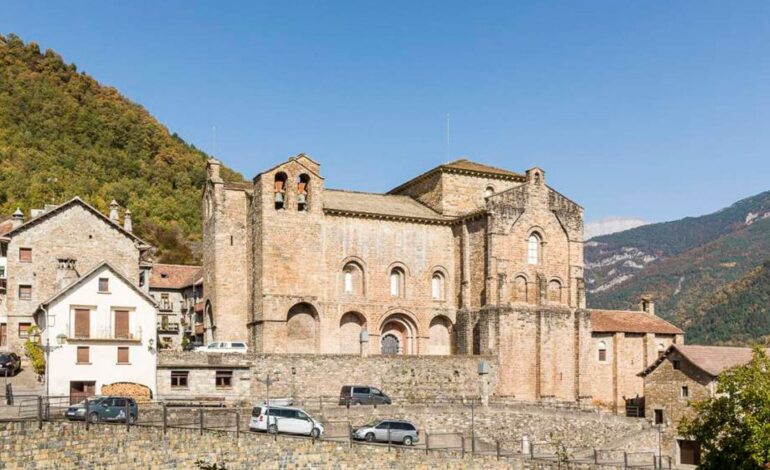
Only 2 kilometers from the municipality in fact, Sirtesa rises as an essential destination for those who wish to discover the spiritual legacy of Alto Aragón. Raised between the ninth and twelfth centuries, the monastery of San Pedro de Sirtesa is considered one of the oldest in Aragon.
From that original monastic complex, the Church is mainly preserved, an exceptional example of the first Romanesque, declared of Cultural Interest in 2002. Its structure stands out for the austerity of its forms and the grandiosity of its unique ship, which invites the recollection.
Raised between the ninth and twelfth centuries, the monastery of San Pedro de Sirtesa is considered one of the oldest in Aragon. Photo: Aragon Tourism
Here, according to the historical chronicles, the young Alfonso I formed the battler, who would become one of the most important kings in Aragon. Inside the temple, a thirteenth -century Romanesque Christ is also guarded, a size of great artistic and devotional value.
The Sirtesa monastery not only impresses with its architecture. A legend wraps this place with a halo of mystery: it is said that the holy chalice, the Cup used by Jesus at the Last Supper, could have been hidden in an apse hole of the temple. This theory relates it to other legendary venues of the sacred chalice in Aragon, such as San Juan de la Peña, Yebra de Basa, Sasabe, Bailo or the Jaca Cathedral.
Although there is no documentary evidence that confirms it, the oral tradition and archaeological interest have kept this belief alive for centuries, attracting researchers, tourists and pilgrims to this remote Rincon del Pyrineum.
What to do and what to do in Sirtesa
Beyond the monastery, Sirtesa offers a typical stamp of the Pyrenean peoples.
URBAN CASE OF SIRESA
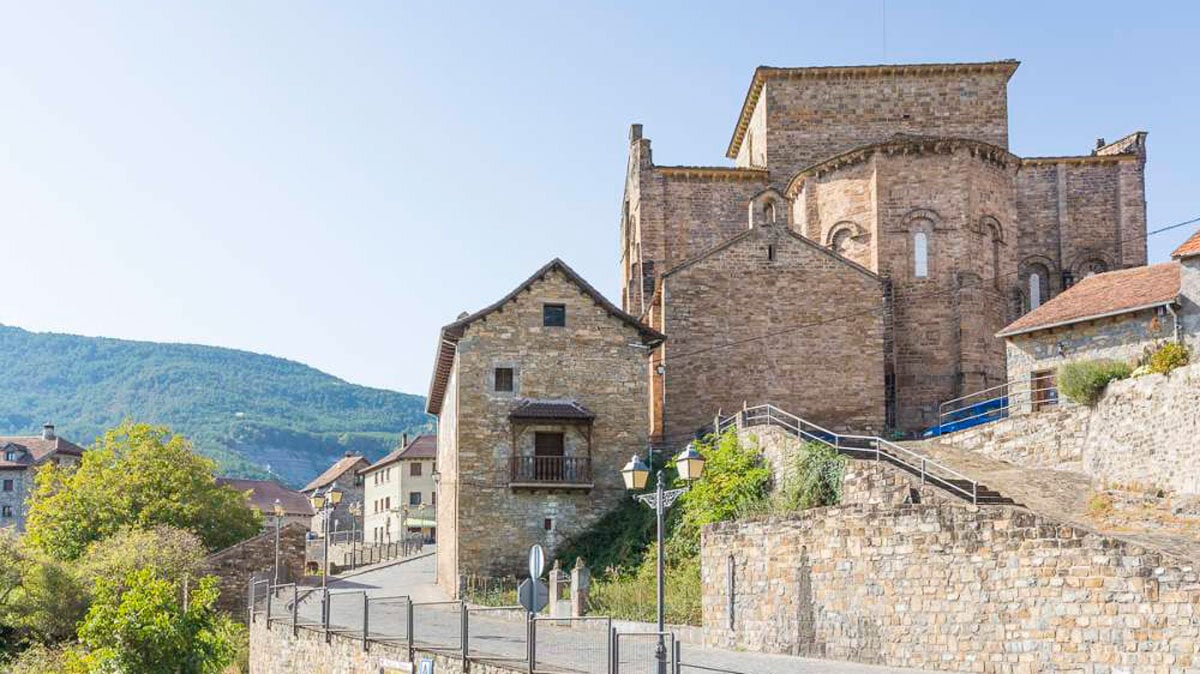
Its urban center is organized around two neighborhoods with narrow, cobbled streets and squares that retain the taste of the old. Stone houses with two waters show the traditional high mountain architecture.
In the Alto del Pueblo neighborhood is the Plaza de la Virgen, while in the Arrabal, next to the monastery, the air of the old passage routes to France is still breathed. In the north of the term, the visitor can find traditional embroiders – some livestock shelters – as well as paths that lead to the dolmens and prehistoric remains that attest to the age of the human settlement in this area.
And if you are fortunate to coincide with its local parties, on February 3 (San Blas) or on June 29 (San Pedro), you can experience the hospitality and customs of its neighbors at its maximum expression
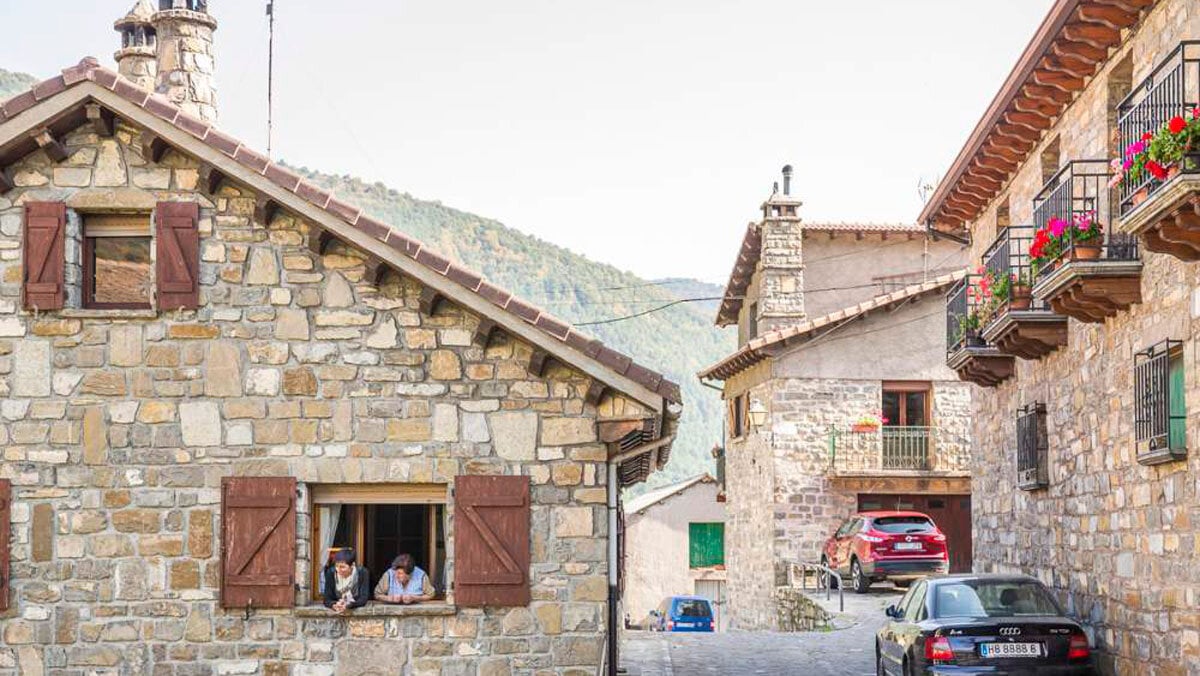
Stone houses with two waters show the traditional high mountain architecture. Photo: Aragon Tourism
Hermitage of the Virgen del Pueyo
Another point of interest is the hermitage of the Virgen del Pueyo, rebuilt in 1816 after the ravages of the Napoleonic occupation. Located in a small high, it offers a privileged panorama of the natural environment that surrounds the town and that houses inside a size of the Virgin Mary with the Child, called Virgen del Pueyo.
The size is made of wood, polychrome and golden golden gold; with ornamental details made with the technique of the stew in blue to the temper in the dress and the throne in which the Virgin sits.
Specal ravine route and oza jungle
For those who seek to walk and disconnect, one of the most recommended routes part of the same Sirtesa and travel the vestal ravine, from where spectacular views of the valley and the town are obtained. The way, without technical difficulty, is ideal to perform as a family.
In addition, there is the Oza jungle, one of the most beautiful forests of the Aragonese Pyrenees. Nestled in the Natural Park of the Western Valleys is one of the most important trees of Aragon, which is surrounded by high peaks with dimensions that are around the 2,700 meters, approximately.
The jungle is also an ideal place for the recreation and enjoyment of families in the middle of nature. The space has picnic tables distributed throughout different areas, a bar-restaurant service (at the end of the Easter until Holy Week) and several parking areas.
How to get to Sirtesa
From Zaragoza to Sirtesa
There are about 2 hours and 15 minutes of Zaragoza to Sirtesa, it is best to go for A-23.
From Huesca to Sirtesa
From Huesca there is approximately 1 hour and 34 minutes, that is, 115.7 km per A-23.
From Teruel to Sirtesa
To go from Teruel to Sirtesa, the journey is a little longer, the route lasts about 3 hours and 45 minutes per A-23.