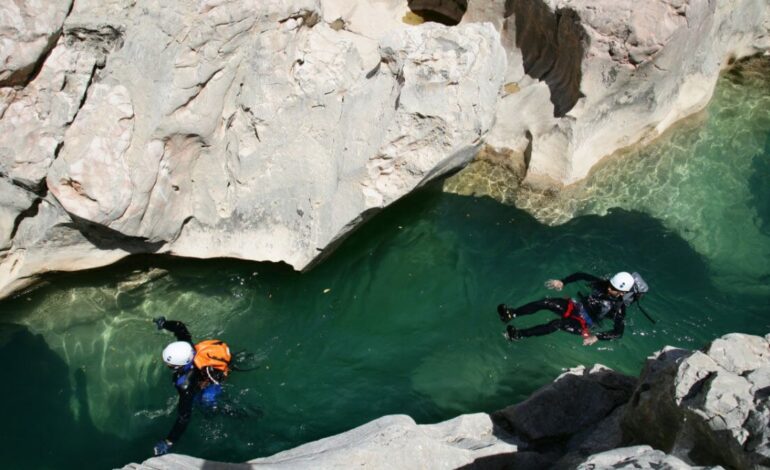

Barranquismo has become one of the most demanded adventure activities in recent years, especially in summer. Equipped with helmet, neoprene and eager for adrenaline, fans descend rivers and cannons raffling jumps, slides and rappels in spectacular environments. He Pyrenees Aragonese is one of the great European destinations to practice it, but there is another place, very close to there, in the pre -pyrineo that rivals in beauty and variety.
The Sierra de Guara is, for many, the cradle of Barranquismo in Europe. Here are options for all levels: from easy and accessible ravines to start, to complex itineraries that require experience and professional guide. Its calcareous walls, sculpted by water for millennia, create a natural paradise for this practice.
Among the best known stands out the descent of the Vero River, ideal to start and enjoy the environment. The Barranco de Gorgas Negras is the longest in the mountains and a technical challenge. The Ottín and Chimiachas ravines also stand out, each with their particular charm. Although the Pyrenees also offers spectacular ravines, many of them have a high technical level and water is much colder, so experienced athletes are recommended.
Down -up of the Vero River, an activity for the whole family
What to do and what to do in the Sierra de Guara
How to get to the Sierra de Guara
Down -up of the Vero River, an activity for the whole family
The Vero River Canyon is one of the most emblematic descents not only in the Sierra de Guara, but of Europe. With a length of between 7 and 10 kilometers, it offers a tour of low technical difficulty although it requires good physical form, resistance and some swimming ability to face chaos of blocks, natural slides and narrow passages through which you enter swimming.
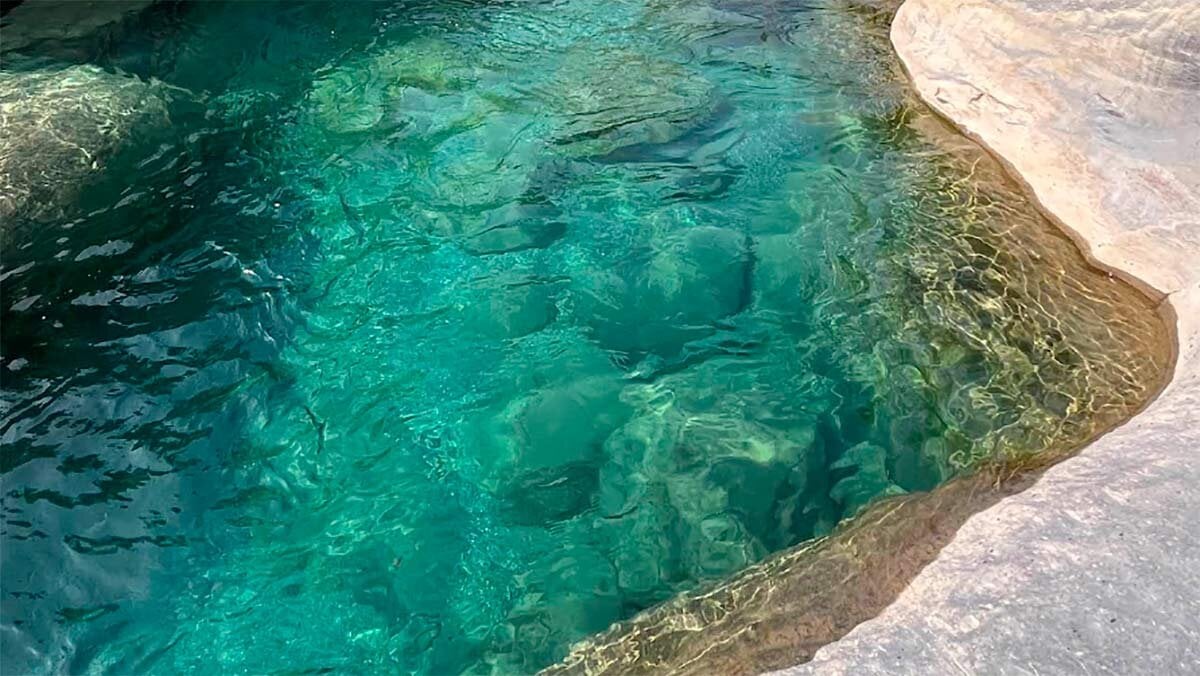
Throughout its spectacular route between calcareous walls of more than 300 meters and turquoise waters, the descent lasts between 3 and 5 hours without counting the stops, being possible to make the lower version (approximately 3 hours) or the complete integral section for those who wish for greater intensity.
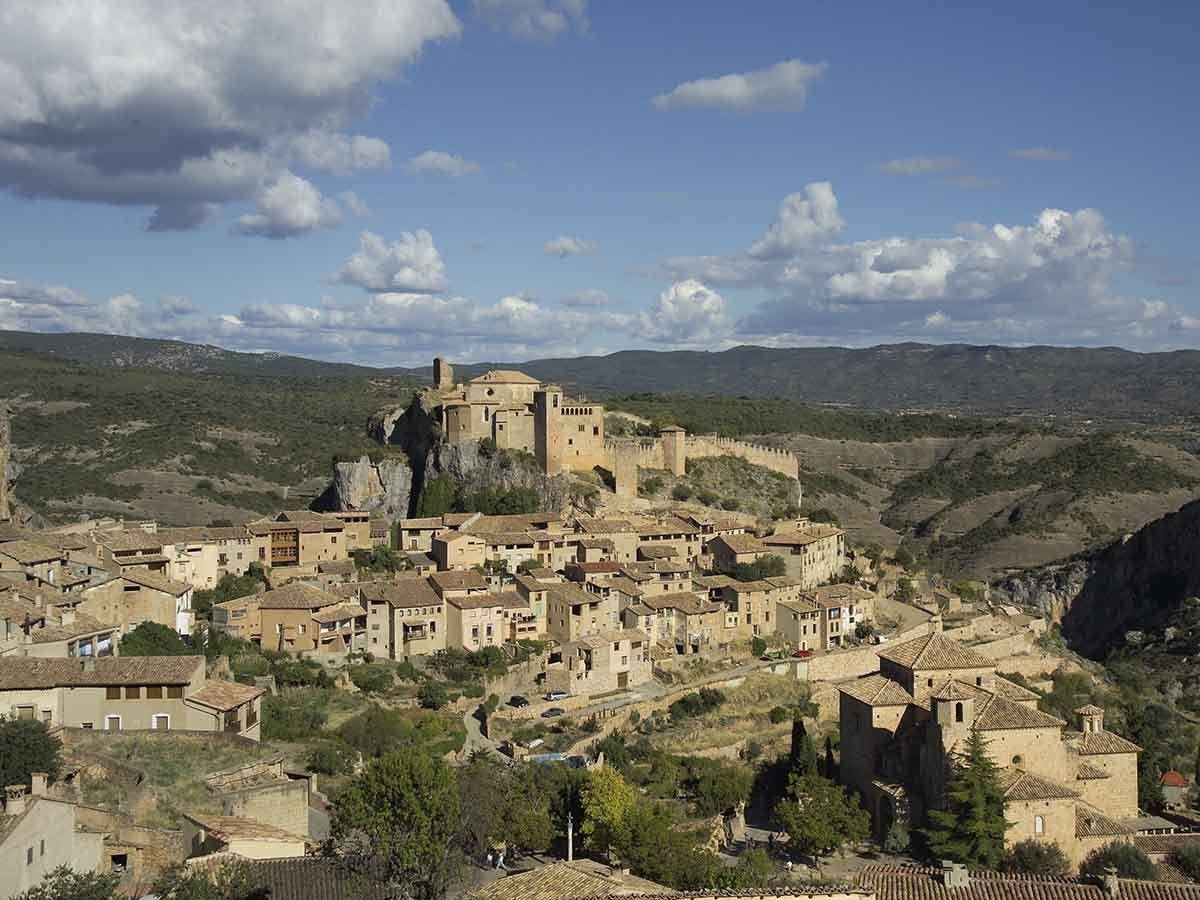
Alquézar panoramic
The option of the lower Vero, starting near Alquézar, is ideal for beginners, families and hikers looking for a show without technical complications: it does not require mandatory rappels or jumps, only optional steps, chaos of Labyrinth type blocks and some siphons.
The integral, longer and more demanding Vero, adds aquatic trekking and descent from higher areas, recommending some exhaust points if the route is sought. In both modalities, the environment is impressive: light that filters in natural caves, lush vegetation and scenic formations such as the Villacantal bridge and the Picamartillos cave, in addition to the approach by panoramic trails from alquézar or lec.
What to do and what to do in the Sierra de Guara
In addition to the descent by the Vero River, this mountains have many other adventure activities to discover and natural spaces to explore.
Vero River Cultural Park
The Vero River Cultural Park is one of the greatest patrimonial treasures of Aragon and a European reference in prehistoric art outdoors. Throughout the throats that the Vero River forms in its middle course, more than 60 coats with cave paintings are preserved, some of which have been declared world heritage by Unesco in the framework of the rock art of the Mediterranean arch. Representations range from Neolithic schematic figures to Levantine -style naturalistic scenes, among which the famous deer of Chimiachas, park emblem, stands out.
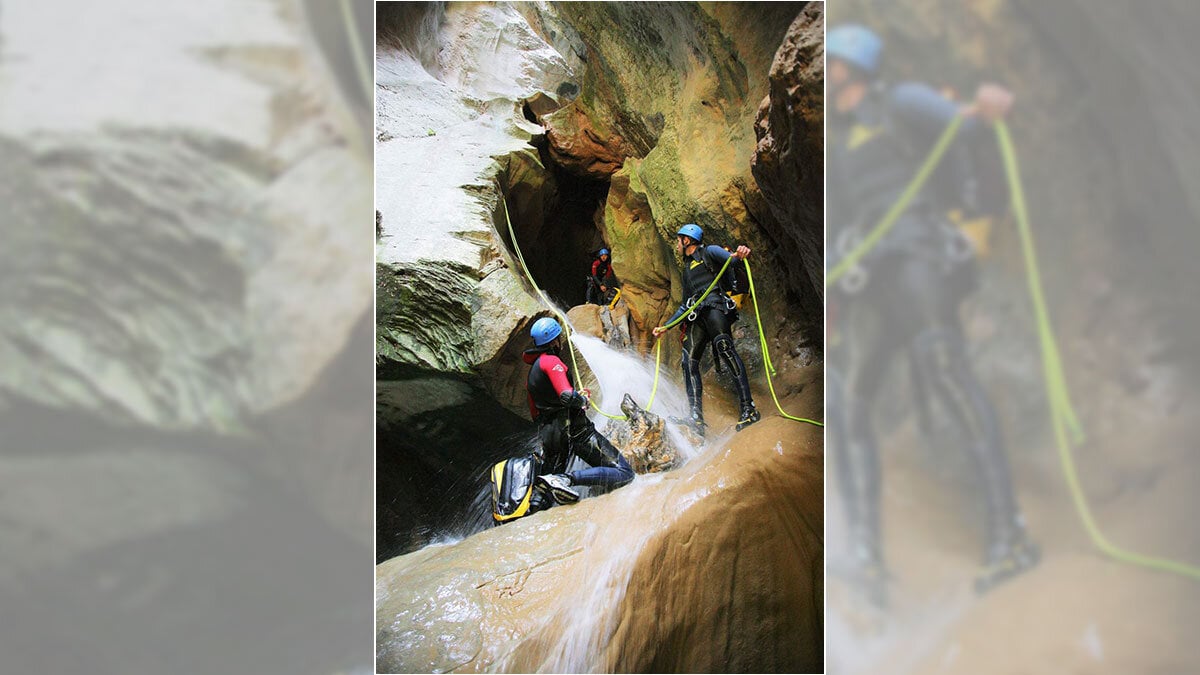
This mountain range has many other adventure activities. Photo: Aragon Tourism
The visit to the park can be made by free or with a guide, thanks to a perfectly marked trails and viewpoints, which allow access to enclaves such as Arpán’s coat, the coat of Mallata or the Chimiachas coat itself. The Interpretation Center is located in Colungo and offers guided tours, workshops and interpretive material to know the historical and symbolic context of these millenary paintings. It is a perfect activity to combine with hiking, nature and culture in one day.
Medieval bridges of the Sierra de Guara
The Sierra de Guara is not only famous for its ravines and wild landscapes, it also hides historical jewels that have resisted centuries of erosion and isolation. With dispersed peoples and deep rivers that cut the terrain, crossing the Sierra in the Middle Ages was a real odyssey, and the bridges were key to connecting the somontano with the Sobrarbe. Today, many of these structures are still standing, witnesses of an era in which the passage through Guara demanded resistance and good roads. Some of the most important are preserved in the Alquézar environment, one of the most visited villages in the park.
Villacantal bridge
This single -arch bridge crosses the Vero River and was part of the road that linked Sobrarbe with Barbastro. It dates from the 16th century and stands out for its great width and solidity, although its access from both ends is steep and something complicated. It is one of the most traveled by hikers who travel the descent of the Vero on foot, since it offers impressive views of the cannon.
Fuendebaños Bridge (or Asque)
Known for its proximity to a tempered water spring, in the Middle Ages it was called Fontes Caldas. This bridge connects with the town of Asque on the left bank of the river and has great historical value, being built on a natural step of constant water, even in winter. It is ideal to combine culture and nature in the same excursion.
L’Abarda bridge
Considered one of the oldest in the entire Sierra de Guara, it was built in the thirteenth century to join Colungo with the road to Barbastro. His name refers to the albardas, the rigs used by cavalries to load merchandise. The structure is settled on a strong current area of the Vero River, which forced a robust and resistant bridge that is still standing between vegetation and rocks.
Tozal de Guara and San Martín de la Val d’ensera
The Tozal of Guara, with its 2,077 meters, is the highest peak of the park and one of the great hiking challenges of the Aragonese pre -pyring. The most common route starts from Nocito and amounts through wild pine forests, grasslands and rocky slopes until they reach spectacular views of the Pyrenees and Somontano.
It is a demanding itinerary, with more than 1,200 meters of accumulated slope and a duration of between 7 and 9 hours round trip, ideal for experienced hikers. During the route you can see broching, leonados vultures or real eagles, among other raptors characteristics of Guara.
For its part, the route to the hermitage of San Martín de la Val d’ensera is one of the most magical and overwhelming in the entire park. This small religious construction of the eleventh century is embedded in a spectacular limestone sickle, between vertical walls through which water falls for much of the year. The access part of the Mesón de Sevil, near Bierge, and travels through a path between holm oaks, passengers excavated in the rock and ancient pilgrimage paths. It is a medium difficulty route, with an approximate duration of 3 to 4 hours (round trip).
Black Gorgas, the longest and most emblematic descent of Guara
The Barranco de Gorgas Negras is the technical jewel of the Sierra de Guara and the most extensive and demanding descent of the entire area, extending along about 5 to 8km through the waters of the rear river. It is ideal for experienced athletes with an excellent physical condition, since its approach from Rodellar requires between 2.5 and 3.5 hours of walking, while the descent lasts between 6 and 8 hours, depending on whether it is combined with the section of the bar.
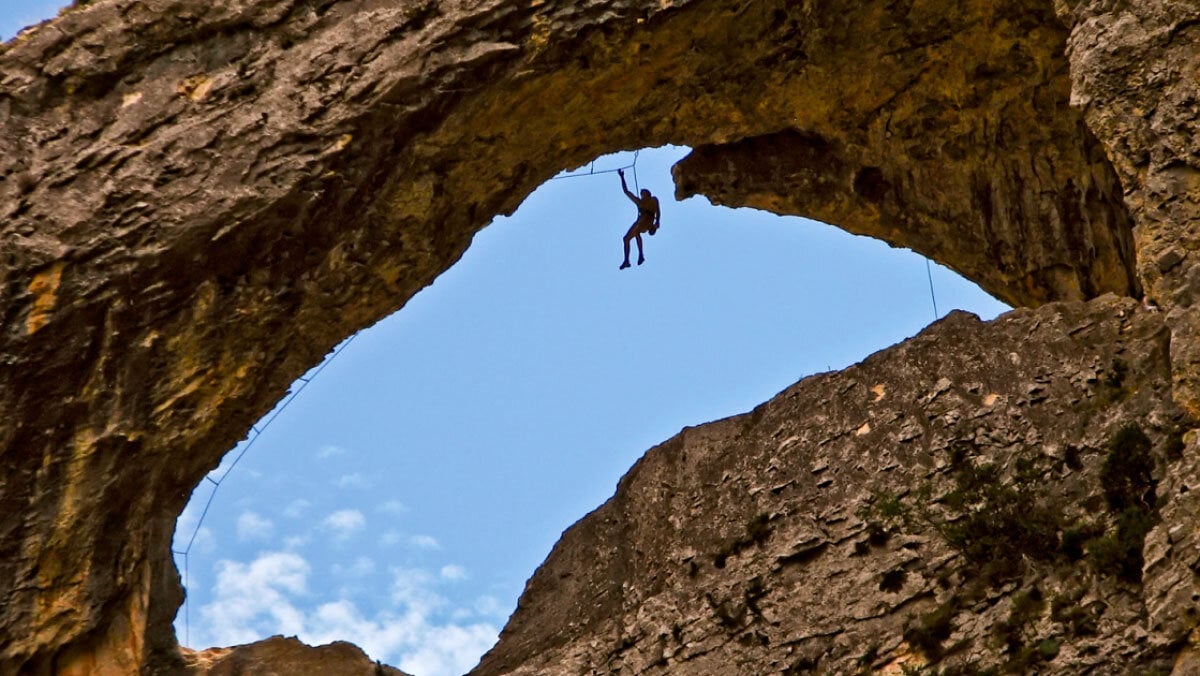
In this area there are many natural spaces to explore. Photo: Aragon Tourism
The entire route takes place through a wild and isolated environment, with calcareous walls that reach the 1,000m of unevenness, caves, narrow and natural jumps of up to 10–12M, surrounded by frozen waters and impressive formations such as the narrow narrow narrow, the jump of the hooks or the final blades before leading to the Pardina of San Cristóbal.
It is a classic for high -level Barranquistas, usually made in reduced groups of 2 to 6 people and always guided by specialized companies, since it requires logistics organization for approach and return, in addition to technical material and permits sometimes.
Otin ravine
The Otín ravine, located in the old foothills of the abandoned people that gives it its name, is emerging as one of the most technical and spectacular descents of the Sierra de Guara. With approximately 16 rappels, many of them “flown” and up to 45m high, demands an advanced domain of descent techniques, good physical condition and rigorous planning. Its sculptural layout passes through a deep rock crack, offering a unique aerial sensation, all in a wild environment surrounded by natural formations of an overflowing beauty.
It is strongly recommended to do it with professional guide and respect the environmental restriction between March 1 and June 30, crucial period for the protection of nest in nesting.
How to get to the Sierra de Guara
From Saragossa
From Zaragoza Capital, the fastest way to get to the Sierra de Guara is by car for the A-23 direction Huesca. The total route lasts 1 hour and 37 minutes.
From Huesca
It takes about 50 minutes to go from Huesca to the Sierra de Guara for the A-1227.
From Teruel
Teruel’s journey to the Sierra de Guara is around 3 hours and the fastest way to arrive is for the A-23.